
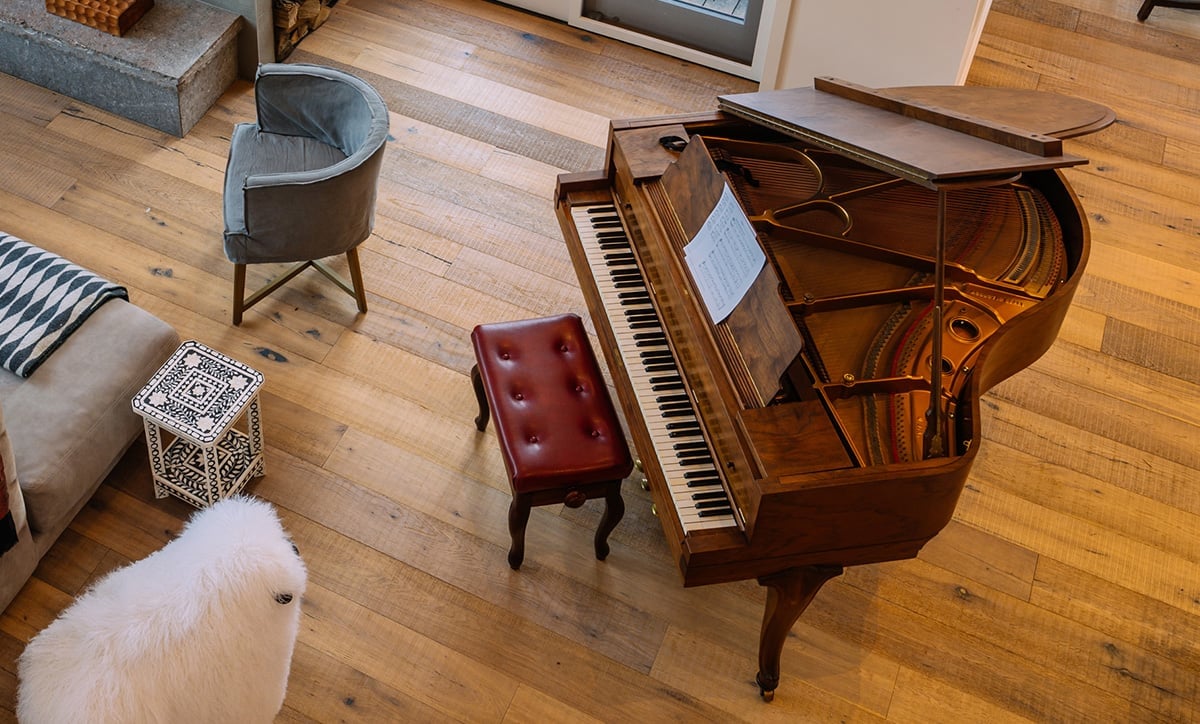
How Much Is a Used Piano Worth?
If you’ve spent any time looking at used pianos online, you’ve probably noticed that prices are all over the map. One seller may be asking thousands of dollars for an older piano, while someone else is offering what looks like a similar instrument for free.
So, what is a used piano actually worth?
There’s no simple formula. A piano’s value depends on its brand, model, age, original quality, current condition, maintenance history, and what buyers are willing to pay for a comparable instrument.
Even two pianos of the same brand, model, and age can have very different values. One may have been carefully maintained for decades, while the other needs expensive repairs to play and sound its best.
And there’s another important distinction: what a piano is worth depends partly on how it’s being valued. The price you might get selling it privately, its trade-in value at a dealership, its showroom retail price, and its insurance replacement value may all be different.
At PianoWerkes, we help customers find quality used pianos and understand what their own instruments may be worth. We’ll explain what affects used piano values, why you might receive different estimates for the same piano, and how to get a realistic idea of what yours is worth.
What determines the value of a used piano?
Brand, model, and original quality
A piano’s brand and model are a good starting point when determining its value, but they don’t tell the whole story.
At the height of American piano manufacturing in 1909, roughly 300 manufacturers produced more than 365,000 pianos. Many of those companies are long gone, but their instruments still turn up in the used piano market today. Some were excellent pianos, while others were more modestly made, which is why researching the original quality of an unfamiliar brand can be so helpful.
Well-known manufacturers such as Yamaha, Bösendorfer, Steinway, Kawai, Mason & Hamlin, and Bechstein have produced instruments that remain desirable in the used piano market. But the brand alone doesn’t guarantee that a particular piano is worth purchasing.
We’ve seen how easily buyers can be drawn to a familiar name without realizing that the individual instrument may need substantial work. That’s why we encourage customers to consider the piano’s original quality alongside its current condition.
A well-made piano that’s been properly cared for can be a wonderful find. Even a prestigious instrument, however, may have limited value if years of neglect have left it needing extensive repairs.
How much does age affect a piano’s value?
Unlike some antique instruments, pianos don’t automatically become more valuable as they get older.
An acoustic piano has thousands of moving parts made from materials such as wood, felt, leather, and metal. Years of playing, along with changes in temperature and humidity, can gradually affect how those parts work.
But there’s no fixed expiration date for a piano. A quality instrument that’s been well maintained may provide decades of musical enjoyment, while another piano of the same age may need significant repairs.
For some high-quality older pianos, rebuilding can be worthwhile. Many others, however, aren’t valuable enough in today’s market to justify the cost of extensive restoration.
A piano’s age is worth knowing, but its condition and the quality of its original construction tell us much more about what it may be worth today.
How a piano’s condition affects its value
A piano can look beautiful on the outside and still have serious problems inside. The opposite can also be true: a piano with scratches or a worn finish may be an excellent musical instrument.
When evaluating a used piano, we encourage buyers to pay attention to how it plays and sounds, not just how it looks.
The action and keyboard
The action is the mechanical system that connects the keys to the hammers and dampers inside the piano. It’s what allows a player to control everything from the softest notes to powerful passages.
Over time, the action’s many moving parts can wear or shift out of adjustment. Keys may become uneven, sluggish, or less responsive, making the piano harder to control.
For an experienced pianist, those problems can limit expression. For a beginner, they can make learning unnecessarily frustrating.
Some action problems can be corrected through routine adjustments or regulation. Others may require more extensive repairs or replacement parts, which can significantly affect a piano’s value.
The soundboard, strings, and other internal components
Several parts of a piano work together to create its sound. When evaluating a used piano, the condition of these components can tell us a great deal about its value.
Here are three important areas to consider:
- Soundboard and bridges: The soundboard is often called the heart of the piano. The bridges carry vibrations from the strings to the soundboard, helping create the rich, resonant sound we associate with a piano. Problems with these components can affect the piano’s tone, sustain, and projection.
- Pinblock: This holds the tuning pins securely, helping the piano stay in tune. If the pinblock can no longer do its job, repairs can be expensive, especially when other structural work is needed.
- Strings: Corrosion, age, and wear can affect the sound of the strings. Older bass strings, in particular, may develop a dull or lifeless tone.
One thing we often find ourselves explaining to customers is that a crack in the soundboard doesn’t automatically mean the piano has lost its musical value. Some pianos with cracks still sound excellent, while others without visible cracks can have serious problems with their sound. What’s more important is how well the soundboard and its related components are functioning.
None of these issues automatically means a piano should be rejected. But they can affect its market value and whether repairs are worth the investment.
Cabinet condition and appearance
A piano’s appearance can certainly affect its resale value, especially when someone is choosing an instrument for their home. But a beautiful cabinet doesn’t necessarily mean the piano is in good playing condition.
We’ve seen pianos in schools, churches, and other institutions with scratches, dents, and worn finishes that still play beautifully because their musical components have been properly maintained.
The opposite can also be true. An older piano with an ornate cabinet may look wonderful but need extensive repairs before it can play and sound its best.
Smaller spinet pianos, which became popular in the 1930s, are another example. Their compact size and lower price made them attractive to families, but their design also came with limitations. Many used a compact mechanical system called a drop action, which can make repairs more difficult. That’s one reason spinets are often less desirable in today’s used piano market.
How maintenance and restoration affect resale value
Why a piano's maintenance history matters
Two pianos of the same brand, model, and age can have very different maintenance histories, and that can make a real difference in their value.
A piano that’s been regularly tuned, properly maintained, and kept in good playing condition may be more desirable than a similar instrument whose history is largely unknown.
When evaluating a used piano, here are a few questions we encourage buyers to ask:
- Has the piano been tuned regularly? Consistent tuning can be a good sign that the instrument has been cared for.
- Have any repairs or adjustments been made? Knowing what’s been done can help you understand its current condition.
- Where has the piano been kept? A stable environment can make a difference in how well an acoustic piano ages.
- Are service records available? Documentation can help confirm the piano’s maintenance history.
Even with service records, we recommend having a qualified piano technician inspect a piano before purchasing it privately. Maintenance history is helpful, but it doesn’t replace an evaluation of the instrument’s current condition.
For more about the ongoing costs of maintaining an acoustic piano, see What Does It Really Cost to Own a Piano?.
Does rebuilding a piano increase its value?
Rebuilding can extend the life of a fine piano, but it doesn’t always increase its resale value by as much as the work costs.
A complete rebuilding may involve replacing strings, restoring or replacing action parts, repairing the soundboard or other structural components, and refinishing the cabinet. Depending on the instrument and the work needed, the cost can reach tens of thousands of dollars.
That’s why extensive rebuilding is generally reserved for high-quality pianos, especially models or instruments with historical or sentimental significance.
One thing we’ve learned from evaluating used pianos is that the term rebuilt can mean different things to different technicians and rebuilders. One piano may have undergone a complete restoration, while another may have had only selected parts repaired or replaced.
If you’re considering a rebuilt piano, ask what work was done, who performed it, and when it was completed. Most importantly, pay attention to how the piano plays and sounds today.
And if you’re thinking about rebuilding a piano you already own, consider why you’re doing it. Restoring a treasured family instrument may be worthwhile even if you won’t recover the cost when you eventually sell it. But if resale value is your main consideration, it’s worth finding out what the piano would realistically sell for after the work is completed.
For more information, see Piano Restoration vs. Rebuilding vs. Refurbishing: What’s the Difference?.
How market demand affects used piano prices
Even a well-made piano in good condition may not sell for as much as its owner expects. That’s because its value also depends on how many people are interested in buying it.
Some used pianos are simply easier to sell than others. Here’s what can affect demand:
- Brand and model: Well-known brands and popular models may attract more buyers, especially when they’ve been properly maintained.
- Age and condition: Newer used pianos in good playing condition are often more appealing than older instruments that may need expensive repairs.
- Size and style: A large grand piano might be a wonderful instrument, but finding someone with enough space for it can be a challenge. Smaller grands and uprights may appeal to a wider range of buyers.
- Location: Demand varies from one market to another. A piano that’s easy to sell in one city may attract fewer buyers somewhere else.
In our experience, good quality, newer used pianos can sometimes be difficult to find. When they do become available, their prices may be closer to those of comparable new pianos than buyers expect.
On the other hand, we’ve seen older uprights, spinets, and even well-known brands become difficult to sell when the cost of moving and preparing them is more than buyers are willing to pay.
That’s why it’s worth looking at what comparable pianos are actually selling for, rather than relying on the asking prices you see online.
Asking price versus actual market value
Just because someone is asking $8,000 for a used piano doesn’t necessarily mean it’s worth $8,000. Anyone selling a piano privately can set their own asking price. Sometimes that price is based on what they originally paid, what they’ve seen similar pianos advertised for, or simply what they hope to get.
But what really matters is what buyers are willing to pay for comparable pianos in similar condition.
You may also notice that used pianos offered by dealerships are often priced higher than those sold privately. That’s because dealers typically have expenses related to moving, inspecting, preparing, and servicing the instruments they sell. They may also include warranty coverage, delivery, or other services that aren’t part of a private sale.
Those services have value, but they don’t automatically mean every dealer’s asking price is fair. And a lower price from a private seller doesn’t automatically make that piano a bargain.
The best way to judge an asking price is to compare similar pianos, consider their condition, and understand what’s included in the purchase.
Why can the same piano have several different values?
If you’ve ever tried to find out what your piano is worth, you may have received different estimates depending on whom you asked.
That’s not necessarily because someone is wrong. The same piano can have several legitimate values depending on whether you’re selling it, trading it in, or insuring it.
Here’s how those values differ:
| Type of value | What it means |
|---|---|
| Private sale value | What you might reasonably expect to receive when selling your piano directly to another buyer. |
| Trade in value | What a dealer may offer as credit toward another piano or pay to purchase yours. |
| Consignment value | The amount you receive when a dealer sells your piano on your behalf, after any commissions or agreed expenses. |
| Retail value | What a buyer might pay for a used piano offered by a dealer, often with preparation, service, or warranty coverage included. |
| Insurance replacement value | What it would reasonably cost to replace your piano with a comparable instrument if it were lost or damaged. |
Selling your piano privately
Selling directly to another person may bring you more than a dealer would offer for your piano, but you’ll be responsible for finding a buyer and handling the sale.
Buyers will also consider what they may need to spend on moving, tuning, inspections, and repairs. Those expenses can affect what they’re willing to pay.
Trading in your piano
A trade-in offer is usually lower than what a dealer expects to sell the piano for. That’s because the dealer needs to account for the cost of preparing the piano for resale, any repairs it may need, and how long it might remain in the showroom before finding a buyer.
Some dealerships also offer trade-up programs that provide additional benefits when you’re ready for another piano. If you purchased your piano from a dealer, it’s worth checking whether you qualify for one of these programs.
Selling your piano on consignment
Consignment means a dealer agrees to sell your piano on your behalf. Arrangements vary. In some cases, you receive a percentage of the final selling price, minus any agreed expenses. In others, you and the dealer agree in advance on the amount you’ll receive if the piano sells. There may also be costs for moving, preparation, or repairs, along with a time limit on the agreement.
Before consigning a piano, make sure you understand the terms and how much you’ll receive after any expenses.
Retail value
Retail value is what a buyer might reasonably expect to pay for a used piano offered through a dealership. That price may include preparation, service, warranty coverage, or other benefits.
You may also see dealers compare a used piano’s price with the cost of a similar new model. That can be a helpful reference, but it doesn’t mean the used piano has its own manufacturer’s suggested retail price.
Insurance replacement value
Insurance replacement value answers a different question: What would it cost to replace your piano with a comparable instrument today?
That amount may be higher than what you could receive by selling the piano, particularly if a comparable replacement is difficult to find.
For insurance purposes, a written appraisal may be needed to document the piano and its replacement value.
Sentimental value versus market value
Of course, there’s another kind of value that doesn’t show up in an appraisal. A piano that’s been in the family for generations may hold wonderful memories, even if its resale value is modest. That sentimental value is very real, but it’s different from what someone else may be willing to pay for the instrument.
Do old or free pianos have resale value?
If you’ve looked at used pianos online, you’ve probably seen some being offered for free. How does a piano that originally cost thousands of dollars end up with little or no resale value?
Often, it comes down to the cost of moving and repairing it.
Many older upright pianos, spinets, and lower-quality instruments need more work than their market value can justify. That doesn’t mean every old piano is worthless. Some are still excellent instruments, and occasionally a perfectly good piano is offered for free simply because its owner needs it moved quickly.
We understand why these offers are tempting, especially for families looking for a first piano. But a free piano that needs $1,500 in moving, tuning, and repairs isn’t really free. And a piano that doesn’t play properly can make learning frustrating for a beginner.
Before accepting a free piano, we recommend having a qualified technician inspect it and getting an idea of what it will cost to make the instrument ready to play.
For more information, see The True Cost of a Free Piano.
How to find out what your piano is worth
If you’re wondering what your piano might be worth, you don’t need to know everything about it before asking for help. But having a few details ready can make it easier for someone to give you an estimate.
Here’s what we recommend gathering:
- Brand and model: The manufacturer’s name is usually easy to find on the piano. The model may take a little more searching.
- Serial number: This can help determine approximately when the piano was made. It won’t tell you what the piano is worth, but age is an important part of the picture.
- Photos: Include the entire piano, its cabinet, keyboard, and any visible damage. Photos of the interior can also be helpful.
- Maintenance history: Share what you know about tuning, repairs, restoration, and how the piano has been cared for.
- Location: Where the piano is located can affect its value, along with the cost of moving it.
Can you get an accurate piano valuation online?
An online estimate can be a useful starting point, especially when you provide good photos and information about the instrument.
An experienced piano dealer may be able to identify the model, consider its age, and compare it with similar pianos in today’s market.
But photos can’t tell the whole story. Two pianos that look nearly identical may play and sound very differently, and some problems simply aren’t visible.
That’s why an in-person inspection may be needed to determine the piano’s condition and provide a more accurate valuation, particularly for higher-value instruments or those that may need significant repairs.
When should you get a professional piano appraisal?
Sometimes a general estimate isn’t enough.
A professional appraisal may be helpful when you’re insuring a valuable piano, settling an estate, documenting an instrument for legal or financial purposes, or preparing to sell a particularly valuable instrument.
The reason for the appraisal matters. An insurance appraisal, for example, may focus on replacement value rather than what you could expect to receive by selling the piano.
If you’re simply curious about selling or trading in your piano, you may not need a formal written appraisal to get started.
A dealer who regularly buys and sells used pianos can often help you understand your options. A qualified piano technician who’s familiar with current market values may also be able to provide an appraisal, especially when a detailed inspection is needed.
Find out what your piano may be worth at PianoWerkes in Albuquerque
If you’re thinking about selling, consigning, or trading in your piano, we’re happy to help you explore your options.
At PianoWerkes in Albuquerque, we regularly work with used pianos and understand what buyers are looking for. We can help you get a better idea of what your piano may be worth and what options might make sense for you.
Start by visiting our Sell or Consign Your Piano page. You can share some basic information about your instrument, along with photos if you have them, and our team will review what you’ve submitted.
You’re also welcome to visit us at 7410 Washington St. NE, Albuquerque, NM 87109 or call 505-338-0028 to talk with our team.
Whether you’re ready to make a change or just curious about your piano’s value, we’re happy to help.
Frequently asked questions about used piano values
How much is my used piano worth?
A used piano’s value depends on its brand, model, age, condition, maintenance history, and current market demand. Two pianos of the same make and model can be worth very different amounts depending on how they’ve been cared for.
For a realistic estimate, start by gathering the piano’s brand, model, serial number, location, and a few clear photos. A dealer who regularly buys and sells used pianos can help you understand what it may be worth.
Do pianos increase or decrease in value?
Most pianos lose value as they age, although some well-maintained, desirable instruments hold their value better than others.
An older piano might even sell for more than its original purchase price. But that doesn’t necessarily make it a good investment, especially when you consider inflation and the costs of maintaining it over the years.
Rare or historically significant instruments can be exceptions.
Are old pianos worth money?
Some certainly are. A well-made older piano that’s been properly maintained or professionally rebuilt may still be a valuable musical instrument.
But age alone doesn’t make a piano valuable. Many older uprights and spinets have little resale value because the cost of moving and repairing them can be greater than what buyers are willing to pay.
Can a serial number tell me what my piano is worth?
Not by itself. A piano’s serial number can usually help determine when it was manufactured, but it doesn’t tell you anything about its current condition.
Two pianos made in the same year may have very different values depending on how they’ve been used and maintained.
Should I have my piano professionally appraised?
That depends on why you need to know its value.
A formal appraisal may be worthwhile for insurance, estate planning, legal matters, or particularly valuable instruments.
If you’re simply curious about selling or trading in your piano, you can often start by contacting a reputable dealer with some basic information and photographs. An in-person inspection may be recommended before establishing a more confident value.
Is it better to buy a used piano privately or from a dealer?
Either can be a good option.
Buying privately may cost less upfront, but you’ll generally be responsible for arranging an inspection, moving, tuning, and any necessary repairs.
A reputable dealer may charge more because the piano has been inspected and prepared for sale, and the purchase may include warranty coverage or other services.
Whichever route you choose, the quality and condition of the individual piano are what matter most.